


The Lake Forest Water Plant: Looking Forward While Remembering the Past
By Sam Sosani
The Lake Forest Water Plant never shuts down, and the six operators ensure its steady and consistent functioning, even during long nights and holidays. The result? The residents of Lake Forest enjoy access to clean water.
“Water utilities are important to every single person in America,” said Mike Tiegs, the Chief Water Plant Operator.

Mike Tiegs shows the top of a membrane module filter to a group touring the Lake Forest Water Plant.
Three generations of Tiegs have worked for the City of Lake Forest, beginning with Tiegs’ grandfather, Allen, in the Streets Section and his dad, Mike, in the Sanitation Section. Tiegs continued this tradition, as he started in the City as a part of the Forestry Section, then Water & Sewer, and now at the Water Plant.
After joining the Water Plant as an Operator, Tiegs explored the history of water plants.
“I found out water plants are kind of interrelated in different ways, whether it’s engineers or the technology that was used or the associations that were developed along the way to bring all those ideas together,” he said. “Back in the 1800s, nobody had water. You had to go get it.”
For most of the 19th century, Lake Forest residents procured water through private wells. In 1890, the Lake Forest Water Company was organized by private citizens. Stockholders included many residents of Lake Forest including John T. Bown, Henry Ives Cobb, Henry Tuttle, C.G. Wenban, and C.C. Pratt.
In 1920, the City of Lake Forest purchased the Water Company for $250,000. Four years later, the electric pumping station was installed, replacing the steam pumps. This improvement allowed for a cleaner process as coal was no longer needed for the pumps to function.
Four years later, the Chicago Bridge and Iron company erected the first 200,000-gallon elevated storage tank, built on North Western Avenue to supplement storage to the existing 120,000-gallon standpipe at Deerpath. Elevated storage tanks create pressure to help with the flow of the water when traveling through pipes.
In 1932, the water plant’s filtration capacity was at 7.2 million gallons. Since 1983, the plant’s capacity has doubled to 14 million per day thanks to vast improvements.
The City Council approved the process of fluoridating the Lake Forest drinking water supply in 1958. Even today, it helps improve oral health and decreases the likelihood of cavities for those who drink Lake Forest water.
As the millennium dawned, a new building was discussed to allow more space to filter the water. Instead, in 2002, an Ad Hoc committee discovered that there was a solution that would lead to more efficient filtration capacity in a smaller footprint with membrane ultrafiltration technology. While the new technology worked successfully, in 2014, the filter manufacturer no longer made the membranes they used.
In turn, three years later, a major construction project began at the water plant. The City Council approved a nearly $10 million budget to install a new membrane ultrafiltration system and improved chemical storage facilities. The new membranes doubled the surface area per module. Each module is 600 square feet of filtration area, and there are 960 modules total across six filtration units.
During this time, the Assistant Chief Water Plant Operator decided to step back to allow Tiegs the opportunity to step in. Tiegs began coming in every day to help lead operations throughout the construction project, which was completed in 2019.
“It gave me invaluable experience about the inner workings of the water plant,” said Tiegs. This year Tiegs transitioned to a new role, the Chief Water Plant Operator.
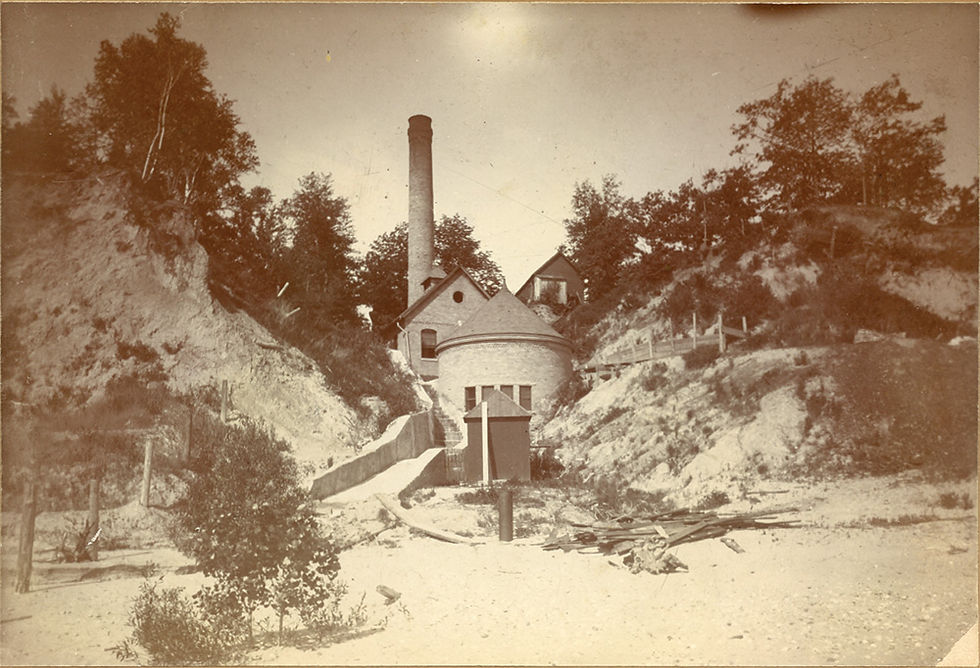
Founded in 1890, the pump house was owned by private citizens. By understanding how or when a project occurred in the past, Tiegs can properly locate information that can be used to effectively to make decisions on what improvements are most important. This information is especially important when a problem arises, such as when a watermain break occurs. Since the water plant operators continuously monitor the system to identify any issues, they quickly diagnosed the problem.
The plant continues to progress and adapt. Today, operators can easily stay connected with one another even when they’re not at the water plant, by using technology like Microsoft Teams. This platform allows operators to post pictures or videos of control system trending, diagrams/plans or share entire files or web links. Microsoft Teams has become the focal point of operations in the daily life of an operator. Operators like Tiegs persistently seek to learn and improve the plant’s communication and functioning.
As the City of Lake Forest is ever evolving, the water plant follows suit, as they continuously look for possibilities to advance operations with the intention of benefiting each household. When being retrospective, it allows for incredible foresight in decision-making and appreciation for how far the Lake Forest Water Plant has come.
“I learn something new every single day I’m here,” Tiegs said. “And if I’m not, then I don’t feel like I am doing a very good job.”


